What If You Saw Swirling Letters When You Tried to Read?
Filed under: Dyslexia and Learning Difficulties Hints and Tips
“Penance in our family, for about five years, was reading with Anthony. ‘That’s it’, I’d snap. Then I’d speak the dreaded words, ‘You’re reading with Anthony as your job tonight!’
Reading with Anthony was sheer agony. He couldn’t sit still, he’d lose his place, forget what he had read 30 seconds after he had read it; and after ten minutes, he would start rubbing his forehead and complaining that his head hurt and that he felt sick. Perfect eyesight, smart as a whip, especially in math but read? – hardly at all!
We tried everything, and then fate stepped in. (It was probably someone with a lot more oompf than mere chance.) I was gathering up books to return to friends when the book Reading by the Colours by Helen Irlen caught my eye. As I was skimming through it, Anthony looked over my shoulders and said in a surprised voice, ‘Gee, those words look nice.’ I turned to him and said, “What do you mean NICE?” Anthony explained, ‘The words are flat with the page and they’re not moving.’ I was baffled. ‘What do you mean not moving?’ Anthony shrugged his shoulders and said, ‘You know, the letters are not shaking and they’re not high off the page.’ I was astounded. ‘No, I don’t know what you mean.’
This particular page was grey with black letters. I quickly turned the page to a white one, and Anthony wrinkled his forehead and described what he thought everyone saw when they tried to read.
It was like a miracle took over after that revelation; everything clicked into place as I did research on Irlen Syndrome. I realized that Anthony had every symptom and no one in the school system was trained to identify this handicap. I found a screener in Ottawa, Adel Francis. We discovered that Anthony had not one but five different sight distortions that were cured with coloured lenses. Within two hours of testing, Anthony read smoothly and flawlessly at a grade NINE level. We were reduced to tears; this poor kid had been pushed and badgered for years and he just couldn’t see the way most other people do.
That brings me to another of my Mottos: Do not dismiss or belittle anything your child honestly thinks, feels, experiences, or does. You are not omnipotent or the ultimate authority on anything. It takes a lot of humility to really listen to even the babbling of a toddler and to take him seriously, to respect what he is trying to share. I have had to repent many times, and it is probably the reason I needed to have so many children. I can be a bit stubborn and thick headed.
Enough of the preaching, but I want to add that 11% to 13% of people have Irlen and they end up frustrated and unfulfilled. Most are not dumb; they just can’t read.
There are quite a few amusing stories to tell that occurred after Anthony started to wear his miracle lenses (they are a mixture of five different colours). After realizing that Irlen is an oral listening problem as well, Mara’s face lit up one night after the younger ones had left the table to play. ‘Hey, I just realized that we don’t have to send Anthony away if we want to discuss an adult topic; we’ll just take off his glasses!’ We all laughed of course.
Then there was the time a friend was attempting to give Anthony a hair cut, but he couldn’t seem to stop squirming. Rachel suggested, ‘Why don’t you try putting on his glasses?’ Anthony put them on, and he sat as still as a stone statue. ‘Oh my god, I don’t believe it,’ she yelled. ‘Everyone come see this. Okay, Anthony, take your glasses off and then put them on when I tell you.’ The difference was so dramatic AND everyone’s reaction was so strong that even Anthony was laughing.”
Article written on motherofnine9.blogspot.com. Posted by Melanie Jean Juneau.
Is your child at school to learn to read, spell and write?
Filed under: Dyslexia and Learning Difficulties Hints and Tips
Having just returned from seeing clients in the north of WA, I was thinking about the comments made by parents and realised, we hear them over and over again and it really doesn’t matter which town or area we are in – parents are desperate for help for their child. They are struggling against a system that actually tells the parents that if their child is having difficulties with reading, spelling or writing, the school is not equipped to do anything about it.
Hang on – aren’t the kids at school to learn to read, spell and write???
Shouldn’t the teachers be trained to teach every child to read, write and add up? If the child is not “getting it”, isn’t the school responsible for changing their methods to adapt to the child’s method of learning so that they do “get it”? Why is it left to the parents to search for answers?
I feel for the teacher, who sees a child in their class trying their hardest everyday and falling further and further behind, not being able to help them because of class sizes and lack of specific training in the strategies for kids who learn differently. Granted, there are many teachers who still put the blame squarely on the child’s shoulders – “pay more attention”, “concentrate on the task”, “put more effort into work”, “try harder” and this could be because they (the teachers) don’t know what they (the teachers) don’t know.
They don’t know the child is often working 4-5 times harder than other children in the classroom to process the same information.
They don’t know that if they find out the child’s preferred method of learning, and present the material in that way, there is a greater chance of success.
They don’t know that KIDS DON’T WANT TO FAIL, they learn to fail – if you struggled with task every time you attempted it would you happily keep trying? No. You would do something else that would give you success – so kids who are struggling, learn they will fail.
As an adult we have the power to change things. We can have a coffee, take a break, ask someone about the task, put it away ’til later, highlight the important parts (in our preferred colour), discuss it with the person next to us, – we have strategies and the power to use them.
A child has no power. They are given a task, usually on white paper, and told to do it and if it’s not done they will stay in at recess/lunch to finish it. They can ask for help from the teacher but often the teacher is busy with other students. If they ask the person next to them, they are told to “stop talking”, “don’t cheat”, older kids can highlight, but how do they know what words/sections to highlight? If they look out the window to take a break, they are labelled “inattentive ADD”. There is no power for the child to make things better. So the only choice they have is to deflect the attention away from what they can’t do. Boys generally play-up, and girls generally suck-up. I’m not being sexist – it’s just the way it is.
So, can we change things to make things easier for your child? The school system is archaic, teacher training is not specific enough and class sizes don’t look like they are changing any time soon, so I don’t have much faith in the school system as a whole, being able to provide for the kids who learn differently to the teaching methods being used today.
Teachers in isolation are updating their skills and researching ways to help the kids in their class (so if you get one of these in your school, treasure them and nurture them and hold on to them as long as you can!). But you are going to have to be willing to ‘go the distance’ for your child. You have to trust your ‘gut instinct’. As a mother you are blessed with “intuition”. You know when your child needs help. You also usually know how your child prefers to learn (watching – visual, listening – auditory, hands-on – kinesthetic, and kids who are struggling need all these methods combined, to learn successfully- multisensory). You need to be strong enough to insist that the school teaches your child to read effectively, (because after all, it is why they are there) and strong enough to remove emotion from the ‘insistence’, so that you are not seen as ‘the trouble-making parent’!.
You have to believe in your child’s potential. Not to be who you want them to be, but to be what they are capable of being.
And the parents I see are searching for just that. They don’t want their child to suddenly change into an A-grade student – they just want help for their child so that they don’t struggle with learning every day! They want their child to be happy and carefree, not worried and depressed.
I think the parent I saw on our recent visit to the north, said it beautifully:
Thank you sooooo much for yesterday, you have answered so many of my questions I can’t believe that it is so easy to fix things for Kira, I really wish I had of gone with my gut instinct earlier and had her tested. Kira has been using the purple sheet and reading so much and all she wants to do now is read which is such a relief for me as a parent. My husband was also really interested to learn more and has been asking me questions which at this stage I have been able to answer.
Once again thanks.
Sheree
p.s. Something that I thought about after the interview was that I didn’t mark, stomach issues after homework and reading. Kira quite often will complain of an upset stomach after she has had to do homework that she has found challenging. I didn’t really put 2 and 2 together until I was thinking about the things afterwards.
So, can I help you? I don’t know until you ask me. I do know the old saying “A problem shared is a problem halved” works for me. Can I fix everything? Probably not. Sometimes it will take a combination of strategies to make the biggest difference. But, if I can’t help you, I have an army of people waiting in the wings for you.
Is it worth it? Look at your child and make up your own mind.
Does your child need your help, or can they solve this problem by themselves?
If they struggle for three or four years at primary school and learn to fail, will they be confident to choose a career path after high school, or will they consider themselves to be “too dumb” to go for what they really want to be? How much are you willing to invest in your child now, to ensure, as an adult, they have the confidence to be whatever they want to be?
Kids are a long-term investment, and the reward is your peace of mind – when they, as adults, are happy and content with the lives they have chosen, and you know you did everything you possibly could to get them there.
For more information on the help we provide, go to the free download of the Ebook “Read, Spell Write, Right?”
or you can use the ‘contact us’ tab on the World Wide Learning Academy website to email your problem.
Cancelled appointments
We were in Karratha as the first part of our twice-yearly trip, to assess and support kids and parents in the northwest, when our daughter rang with the news she had a condition that the doctor considered too dangerous to allow her to complete her pregnancy in a country hospital. He wanted her to go to Perth for the last few weeks to be monitored, and made her aware she could be in for an emergency trip at any time. She already has 3 young children under 5 years old, so there was nothing else we could really do, but turn around and go back home to help.
I agonised for about three hours before making the final decision,because I had more than 20 people booked, in Karratha, Hedland and Broome, that needed my help for their kids…. but in the end there was only one decision and family had to come first.
The support I had from parents was overwhelming! I know parents understand, but it was not only an inconvenience for everyone but also a disappointment for the kids who, because of the remoteness, don’t have ready access to help for their learning problems. Some have made the long trip down to see me in Dongara and I hope to fly up, before the next trip, scheduled in six months. So I will be there to help you all as soon as I can.
And thank you again to the wonderful people I work with, all over the north of WA. I love what I do and really look forward to seeing you all again. To see how your children are progressing and what else I can do to help.
Warm regards
Beatrice Burg
New technology to teach learning-disabled students
Filed under: Assistive Technologies, Dyslexia and Learning Difficulties Hints and Tips, learning resources
“A special education school in Lanham has begun using state-of-the-art technology to teach its students, many of whom have learning disabilities ranging from dyslexia to autism.
High Road Academy of Prince George’s County, which teaches 80 students ranging from grades two to 12, began using iPads last fall to improve the reading, math and motor skills of its students. Staff members said the tablet computers — first released nationally last April and used at the school since November — have increased students’ interest in learning.
Of the Lanham school’s 80 students, 60 are high-school-aged. The school is funded by the state and works with the county school system, accepting referred students with learning disabilities and anxiety disorders and educating them free of charge.
“They do best in an environment such as ours, where there’s a smaller student-to-teacher ratio,” said school director Annette Mercer. The school has nine teachers and two reading specialists. “In the public schools, you’ll find that a one-size-fits-all technique is used. But here, we don’t. Everything is individualized.”
The school, which opened in 2002 and moved to Lanham four years ago, has also added five SMART Boards, interactive touch-screen whiteboards that allow teachers and students to write and solve problems. Teacher LaToya Clemons of Laurel said the new tools have given students a way to reinforce lessons they’ve learned in more traditional ways.
‘They use it in conjunction to further skills that they already know,’ Clemons said. ‘It helps them to understand a concept … instead of just always writing it.’ “
Sensory overload and Irlen Syndrome
Filed under: Assistive Technologies, Dyslexia and Learning Difficulties Hints and Tips, Teenagers, learning resources
Had some recent queries about how to deal with sensory overload, as experienced by people with Irlen Syndrome and also on the autistic spectrum and I found this great site. The writer speaks from his own experience, which sometimes can be so much better than quoting from books!! Well, they are real people actually living through the problems and finding what works for them. Some of the ideas may help others too.
Also came across this video, describing what it’s like for kids, (by a kid) to read when they they have Irlen Syndrome, but have not been diagnosed.
Why is it that we accept red/green colour-blindness so readily, but have so much difficulty with the notion that people may process other colours (e.g. black print on white paper) differently too?
When Cooper Green started to learn to read, no one told him that the words were supposed to stay still on the page. Cooper had no idea that when the other children in the class looked at words in a book the words didn’t suddenly disappear, fade or distort or, worst of all, chug across the page like a train in a cartoon. Read it all.
If you find any of these helpful or think someone else will, please add your comments and/or pass them along.
Technology to help kids learn.
Filed under: Assistive Technologies, Dyslexia and Learning Difficulties Hints and Tips, Teenagers, learning resources
I happened to be browsing through a site for some office supplies and came across these videos reviewing different technologies which can be used in the classroom or at home, that will make life easier for kids who are struggling with assignments, or just writing in general.
One is the digital pen. I use one when I am demonstrating something in my online classroom, because it allows me to write in my own handwriting (showing the formation of letters, taking notes etc) and keep a copy of the exact page on the computer – so if kids find they are quicker with handwriting than typing, they can outline their notes on a page, save it as text and this can be emailed or put into a word doc. – simply and easily.
The other video I found helpful, was a basic rundown of the differences in laptops (notebooks) and how to choose the right one for your purpose. It outlined the differences in price, size and power (processing speed) as being the most important factors for choosing the the laptop that is right for your child.
I am a great believer in using technology to help kids succeed. If it is the difference between them having the confidence and motivation to ‘have -a-go’, or putting it in the “too hard” basket – I know which one is going to give them the better learning experience!
Click here for the link to the videos.
Does your teenager want a job?
Filed under: Dyslexia and Learning Difficulties Hints and Tips, Teenagers, learning resources
The holidays are coming up and some of you are dreading your teens hanging around the house, or worse, out on the streets and continually asking you for spending money! Some will have jobs and be starting to learn about paying their own way – but sometimes the jobs aren’t available.
Your supermarket may not be hiring, you may not have a burger joint close, you may live on a station or farm and not be able to drive your teen to a job, even if it was offered.
Well, this came across my desk the other day and I thought - what the heck!, I’ll give it a go and see if I can recommend it to parents.
It was called Teen Cash Machine and had a few things going for it straight away
- It was Australian.
- It didn’t cost hundreds of dollars.
- It was aimed at the teenager, with their language and interests
- It can be monitored by parents – as much or as little as they want (you can even try it out like me!)
So I bought it and started watching the videos and doing the steps, set up a couple of sites and - to my great amazement! – started to see money appearing in my Paypal account!
This program was really easy to understand and the steps were logical and part of a system that could be repeated over and again. The teacher part of me really liked:
- the visual part of the lessons - for those kids who need a multisensory method of learning,
- the sequential kind of teaching (step-by-step),
- the way I could pause (if the phone rang) and come back to it
- that I could repeat sections as many times as I wanted
- that I could pause at anytime to take notes
- the important web addresses or links were placed below the video for me to click on, or copy
I started to get excited, because I could see it would appeal to kids in so many areas and be an opportunity for them to start to earn their own money. AND the thing that convinced me to pass it on to parents was, there is a TRIPLE guarantee - so you really can’t lose.
Anyhow, click on the link below to listen to the offer (maybe have your teen there as well to see if they will commit to doing it!) and see if it makes sense to you, as it did for me.
Click here for TEEN CASH MACHINE
Speech to Text. Technology to help students struggling with writing.
Filed under: Assistive Technologies, Dyslexia and Learning Difficulties Hints and Tips, learning resources
Really this technology is old as the hills! Years ago bosses would dictate their information into a tape recorder/dictaphone for the secretary to ‘type’ up. It just needed the human input for the typing, whereas speech recognition software bypasses the human and puts the words straight on the computer!
If kids are having trouble putting words onto paper, why not use technology to record their words?
Why is the education system staying so long in the dark ages, when the business world is zooming ahead with all the technology that’s available to help them get their message across?
Kids writing is so often stunted because they forget their ideas while they are concentrating on the spelling, grammar or framework of their writing, so they don’t have a chance to show what they are really capable of. In my reports, one of the recommendations for older students is to record their ideas so that they can replay them as often as necessary, to write their notes, refresh their memory and keep themselves on track. How wonderful if their ideas were immediately written on the screen for them to read!
Anyway, check out the Dragon Naturally Speaking website and then Check out this $99 offer. ( I get no benefit at all if you order!)
If your high school/university student is struggling with assignments, it may help.
And a link to the Assistive Technologies Conference download I went to last month in Perth, where this speech recognition software was mentioned along with other technologies being recognised at secondary/tertiary levels.
Now we just need this to filter down to the primary area!
The BIG “Hints, Tips and Formulas” file
Filed under: Assistive Technologies, Dyslexia and Learning Difficulties Hints and Tips, learning resources
OK, OK, it took longer than the end of the week to put this together! But I wanted the finished product to answer as many questions as possible, for you and your child !
Not just “when do I double the consonant?” but
“How do I know when to use ‘ed’ or ‘t’ on the end of a word to make the ‘t’ sound?”
“The 100 demons!!.. I remember them… or do I?”
“Nouns, verbs, pronouns, semi-colon, apostrophes…. do I use an apostrophe for its?”
21 points to check when proofreading and editing.
And for maths too:
“What IS the formula for the area of a circle???”
“How do I work out mean median, mode and range? and what are they anyway????”
and hundreds more!!
Well, I’m really excited, because the BIG “Hints, Tips and Formulas” file has the answer to all these questions and more! AND it’s all in one beautiful, BIG zip-up folder, so no more turning the house upside down to find “the book” that tells you the answer, or searching the internet for hours, because you got distracted onto something else!! (It happens!).
Imagine the peace and quiet, your child sitting at the desk, working through their homework, finding the formulas for their maths, the spelling for their writing, and the frameworks for their stories. It’s called “scaffolding” – giving the kids some help, to successfully get their work done.
So ACT NOW, because out of 50 of the BIG “Hints, Tips and Formulas” files, I only have 10 left.
CLICK HERE to get immediate access to the BIG “Hints, Tips and Formulas” file offer.
Ten tips for next year, Day One.
Filed under: Dyslexia and Learning Difficulties Hints and Tips, learning resources
What’s the best way to make sure your child is ready for day one, next year?
Make sure the teacher/s knows everything they need to know, as soon as you can.
Don’t give them a folder of information to read – it may take them 6 months to get to it. Not because they don’t care, but they ARE very busy and may have up to 30 other kids …. if you don’t believe me, you try it. Just think of the last kids’ birthday party you went to – and I bet there weren’t even 30 kids there! Bedlam wasn’t it? (Why do you think they only last 2-3 hours at the most and LOTS of them are held at Hungry Jack’s or Macca’s???)
Anyway, here are some ideas. You can use them all or just the ones that you need for your child. And if you have any other suggestions, on what works and what doesn’t, please leave a comment. After all, no-one knows your child like you.
- Make sure you have an up-to-date report, showing just where your child’s literacy levels are and where they need specific help or remediation.
- Ask for a meeting with your child’s teachers, as soon as possible, when school starts.
- Have the report ready and go through it with them. Try to get them to establish an IEP (Individual Education Programme) which includes one or two recommendations from each section of the report, so that everyone will be on the same page as to what they will be focussing on trying to improve and what resources they will be using.
- If there is no need for an IEP, at least get them to start a file with a copy of the report. Go through it with them, highlighting one or two recommendations from each section of the report, so that everyone will be on the same page as to what they will be focussing on trying to improve and what resources they will be using.
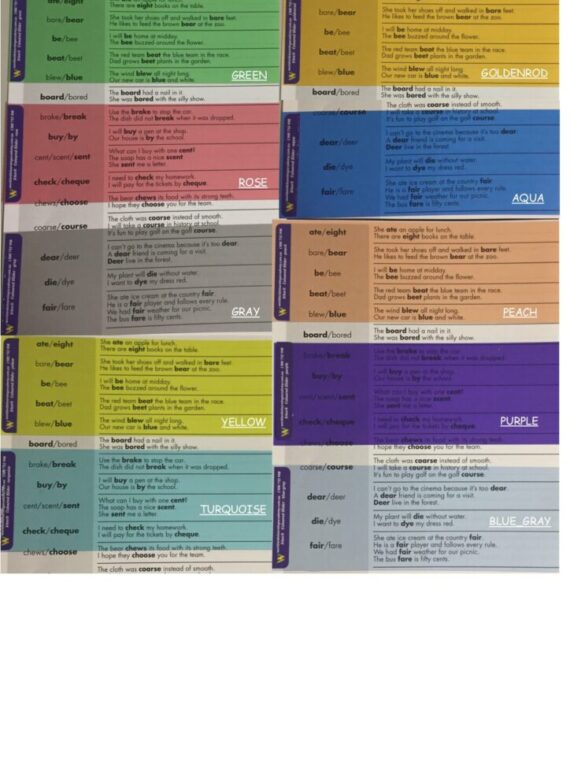
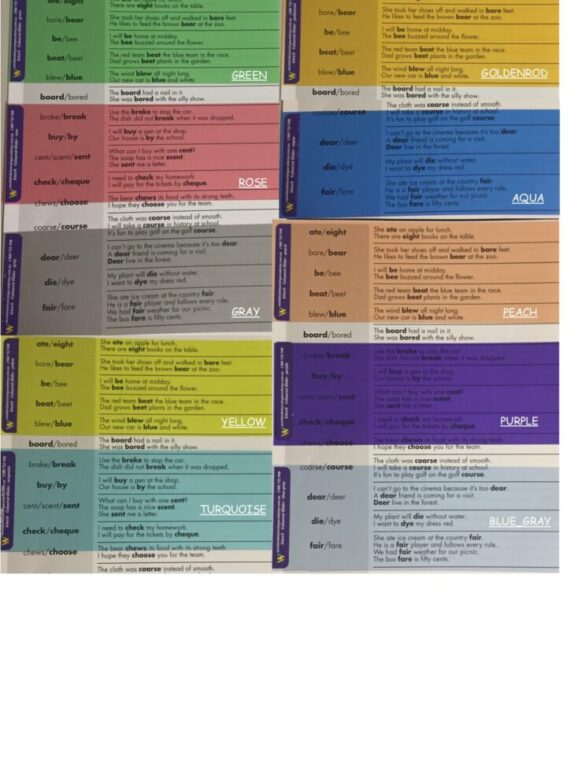
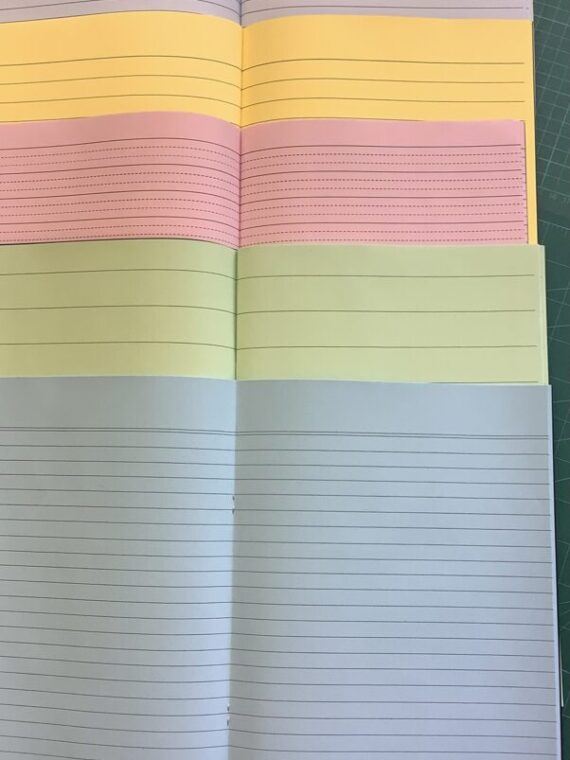
- Make sure they have noted any specific accommodations your child needs: coloured paper, glasses, Irlen Spectral Filters, etc.
- Ask for a review date at the end of Term One to be noted in the IEP or file, so that it can be updated ready for Term Two.
- Make sure you say several times, your child wants to learn and is trying as hard as they can, and they can do the work if they are given a bit of extra help in the form of: clear, ‘chunked’ direction/instructions, time to think, help with planning, guidance with the frameworks of writing
- The first three will be relevant to maths as well.
- If possible, organise at least one hour each week of tuition – private if you can manage it, to take the stress away from the home – to introduce the missing skills. Ideally these should also be noted in the IEP, so that the skills are being used and practised and continue to develop.
- If you are worrying about your child’s learning, trust your instincts and get help – sooner rather than later. Each day you wait, is another day of your child learning to fail.
WP Cumulus Flash tag cloud by Roy Tanck requires Flash Player 9 or better.